Celebrities Who Look Alike: The Pairs That Break the Internet
March 9, 2026
Celebrities Who Look Alike: The Pairs That Break the Internet
Some celebrities look so alike that even their fans get confused. Their costars have mixed them up on set. Interviewers have called them by the wrong name. And the internet, reliably, loses its mind every time someone posts a side-by-side.
Celebrity lookalikes are not a new obsession. But AI face matching has made the conversation a lot more precise. When you can quantify how similar two faces actually are, the results are often surprising. Some pairs that look identical to the human eye score lower than expected because one feature diverges dramatically. Some pairs nobody talks about score in the high eighties.
This is the definitive breakdown of celebrities who look alike, organized by how strong the resemblance actually is, what's driving it, and what an AI makes of the ones that fool everyone.
Tier 1: The "Could Be Twins" Pairs
These are the pairs so close that actors get mistaken for each other, fans confuse them in posters, and tabloids have been running "which one is which" quizzes for years.
Katy Perry and Zooey Deschanel
This is the original celebrity lookalike internet argument. At the peak of both women's visibility in the late 2000s and early 2010s, the confusion was constant. Both have large, dark, heavily lidded eyes that dominate their faces. Both have strong brows, a prominent cupid's bow, and dark hair they often wore blunt-cut with bangs. The eye shape, the brow placement, and the lip proportions are genuinely close in facial geometry.
The divergence, when you look carefully, is in face shape. Katy Perry has a rounder face with a softer jaw, while Zooey Deschanel's face is longer and slightly narrower. That difference shows up clearly in AI scoring, which is why the pair often registers lower than people expect given the visual impact. The eyes do most of the work for the human eye. The jaw undoes it in the data.
That said, both women have been asked about the comparison so many times it became a running joke. Zooey Deschanel once joked that the confusion helped both their careers. Given where they were in 2010, she was probably right.
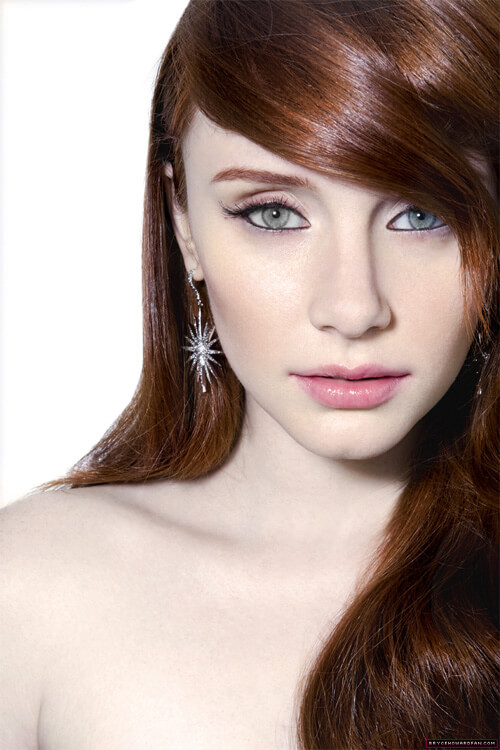
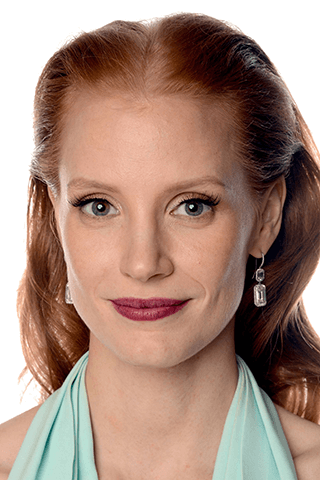
Bryce Dallas Howard and Jessica Chastain
One of the most frequently cited celebrity lookalike pairs in Hollywood, and the one that has caused the most professional confusion. Both are redheads. Both have pale, freckled skin, similar bone structure, and a face shape that reads almost identically in casual observation. Both are serious dramatic actresses who were working in elevated Hollywood fare at the same time. The combination made the mix-up almost inevitable.
The specific features driving the resemblance: a similar brow arch, matching eye spacing, comparable cheekbone height, and a very similar nose profile. Their skin tone and hair color create a strong first-impression match that primes the brain to see structural similarity even where it is more approximate.
The important point here is that AI face matching cares about geometry, not coloring. Even without the red hair, these two faces score highly. The structural overlap is real, not just a surface aesthetic match.
Jessica Chastain has said publicly that she finds the confusion flattering. Bryce Dallas Howard has noted, with some dry amusement, that the two of them have met and do not actually look that much alike in person. That is the nature of these comparisons: cameras flatten and simplify, and certain features get amplified in the translation to screen.
Amy Adams and Isla Fisher
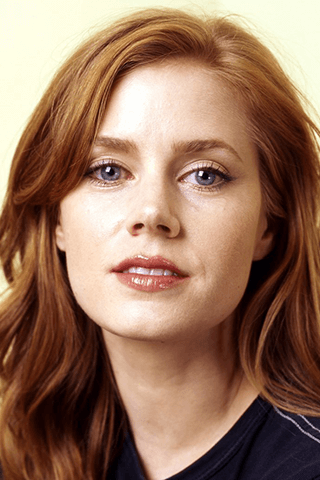
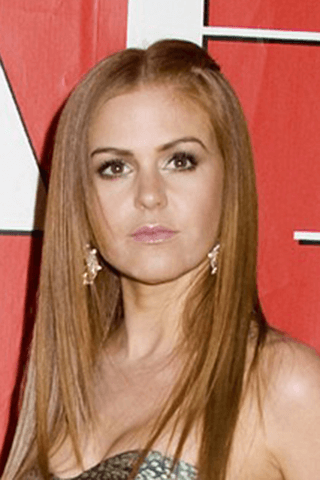
Both are redheads, which immediately primes the lookalike comparison. But unlike some celebrity pairs where the hair color is doing all the work, Amy Adams and Isla Fisher have genuine structural overlap.
Both have round faces with wide, slightly prominent cheekbones. Both have green eyes set at a similar depth. Both have a soft, rounded nose tip and a wide smile that creates similar cheek shadows. The face width-to-height ratio is close, and the feature sizing is comparable across most of the standard facial geometry measurements.
The main differentiator for AI scoring is brow shape and placement. Isla Fisher has higher, more arched brows. Amy Adams tends toward a flatter, more horizontal brow. That single feature, which does not register strongly in casual observation, can shift a similarity score by several percentage points.
Both women have been aware of the comparison for over a decade. There are red carpet moments where even professional photographers have mislabeled the photos.
Margot Robbie and Jaime Pressly
A less commonly cited pair outside of dedicated celebrity lookalike communities, but one of the strongest structural matches in Hollywood. Both have high, pronounced cheekbones, wide-set blue eyes, a strong jaw that softens toward the chin, and a similar nose profile with a narrow bridge and a soft tip.
The Margot Robbie and Jaime Pressly comparison does not come up as often simply because of the age gap between their peak visibility. Jaime Pressly was most prominent in the early to mid-2000s; Margot Robbie became globally recognized in the 2010s. But if you place their faces side by side from the right era, the structural similarity is hard to dismiss.
For a list of celebrity pairs worth checking against your own features, our breakdown of celebrity doppelgangers goes deeper into the science of why certain face shapes recur across generations.
Tier 2: The "Same Gene Pool" Pairs
These pairs share a strong family resemblance in the structural sense. Not confusable side-by-side, but share enough anchor features that the comparison is immediately legible.
Natalie Portman and Keira Knightley
This one has a famous real-world data point. In the Star Wars prequel trilogy, Keira Knightley was cast as Natalie Portman's decoy specifically because of their physical resemblance. That is the studio system itself acknowledging the pair as one of the strongest celebrity lookalike matches in film history.
The features that create the overlap: both have large, almond-shaped dark eyes, a very similar nose profile, and a strong jaw that is angular but not heavy. Their face shape classification lands in the same range. The primary divergence is in the mouth and chin: Keira Knightley has a slightly wider jaw and a more prominent chin, while Natalie Portman's lower face is proportionally smaller and more delicate.
The similarity score tends to run high when they are photographed in similar conditions, but lower when the jaw angle is clearly captured. It is a face-shape match more than a feature-by-feature match.
Nina Dobrev and Victoria Justice
Both have oval faces, large dark eyes with a similar almond shape, straight dark brows, and a wide, even smile that creates comparable cheek architecture. The resemblance is strong enough that fans of both regularly raise it in comment sections, and neither actress has been able to fully escape the comparison.
The divergence: facial width. Victoria Justice's face is slightly wider at the midface, which shifts the feature proportions enough that a careful observer can separate them. In AI scoring, this tends to translate to a high match with caveats. The eye and brow region scores well; the lower face pulls the overall number down.
Tom Hardy and Logan Marshall-Green
The male celebrity lookalike pair that causes the most genuine confusion among audiences. Both have strong, heavy brows, a similar jaw structure with a defined chin, and deep-set eyes that read at nearly the same spacing and depth. Both have a face width and structure that sits in the same range by almost any facial geometry measure.
Tom Hardy's profile is more widely recognized due to his franchise film work, but the resemblance is strong enough that Logan Marshall-Green has been approached at events by people who were certain they recognized him from a Hardy film. The comparison has been reported multiple times in entertainment media.
The AI scoring on this pair tends to be genuinely high because the resemblance is structural, not just a surface coloring match. Jaw angle, brow placement, and eye spacing are all close. The nose is where they diverge most clearly.
Tier 3: The "Nobody Talks About This" Pairs
These are the overlooked celebrity lookalike matches that do not trend on social media but score surprisingly high in actual AI face analysis. The pairs that make you do a double take when someone points them out.
Jennifer Connelly and Megan Fox
Two of the most visually striking faces in Hollywood, and the comparison almost never gets made because they exist in different eras of cultural visibility. But the structural overlap is real: both have very large, dark, deep-set eyes, strong dark brows, a similar narrow nose bridge, and full lips. The overall face classification is close, and the high-contrast feature style creates a near-identical visual impression in still photography.
The reason this pair rarely comes up: Jennifer Connelly's peak was the late 1990s and early 2000s, when Megan Fox was not yet prominent. By the time Megan Fox was everywhere, the Connelly comparison was not front of mind. But the face geometry tells a clearer story than the cultural timeline.
Leighton Meester and Minka Kelly
These two caused a genuine casting and tabloid moment around 2009 when both were appearing in popular television at the same time. The resemblance is strong in person and even stronger on camera: both have dark hair, a similar face shape, matching eye depth and color, and a comparable mouth width and lip proportion.
The AI scoring on this pair tends to be among the highest for any two celebrity faces in the database, sometimes reaching into the high seventies. The face shape is nearly identical in classification. Eye spacing and brow placement are close. The jaw is the clearest differentiator when it is clearly captured.
James McAvoy and Daniel Radcliffe
Unexpected, but the facial geometry comparison holds up. Both have compact, symmetrical faces with similar proportions, close-set eyes with a comparable shape, and a nose profile that reads similarly in profile view. The face width-to-height ratio is close, and both have a feature arrangement that clusters in the upper face.
This is a pair where human observation does not make the connection easily because the cultural associations are so different. But strip away context and the structural reading is closer than most people would guess.
Helen Mirren and Cate Blanchett
A generation apart, but the high-cheekbone, long-face, precise-brow architecture is similar in ways that become more apparent in formal photography. Both have very similar face length-to-width ratios, comparable brow shape, and a similar eye setting that creates a comparable upper-face profile.
Male Celebrity Look-Alikes: The Section That Gets Overlooked
Most celebrity lookalike content focuses on women. This is partly a reflection of where cultural attention goes, and partly because female celebrity faces get photographed in more comparable conditions, which makes the comparison easier to illustrate.
But the male celebrity lookalike matches are just as striking. Here are the ones that hold up under scrutiny.
Tom Hardy and Logan Marshall-Green is covered in Tier 2, and it is the strongest structural match in the male celebrity database by most measures.
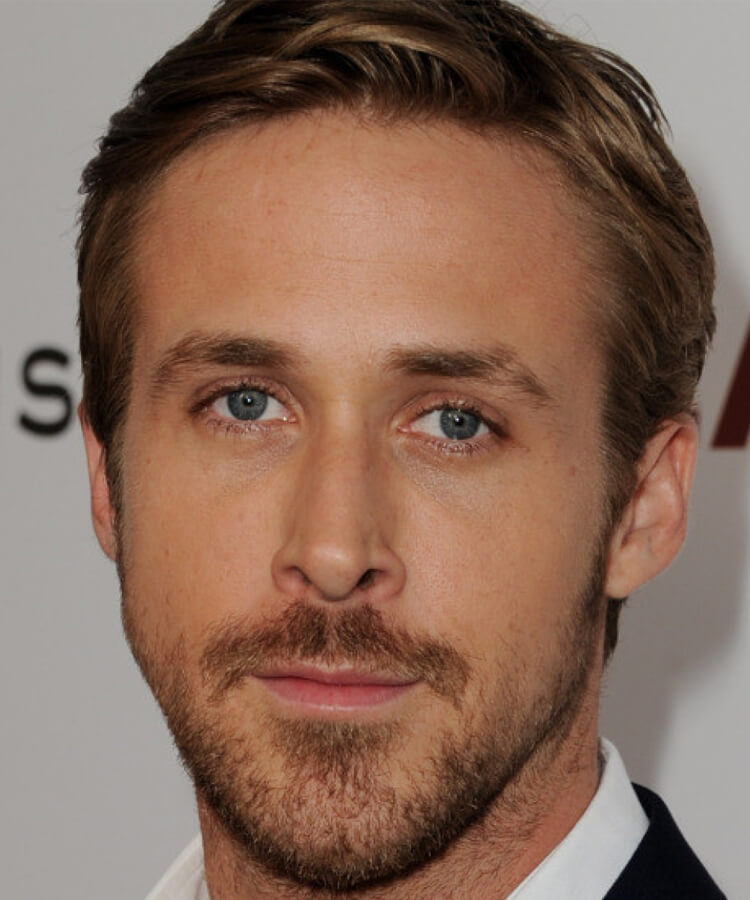
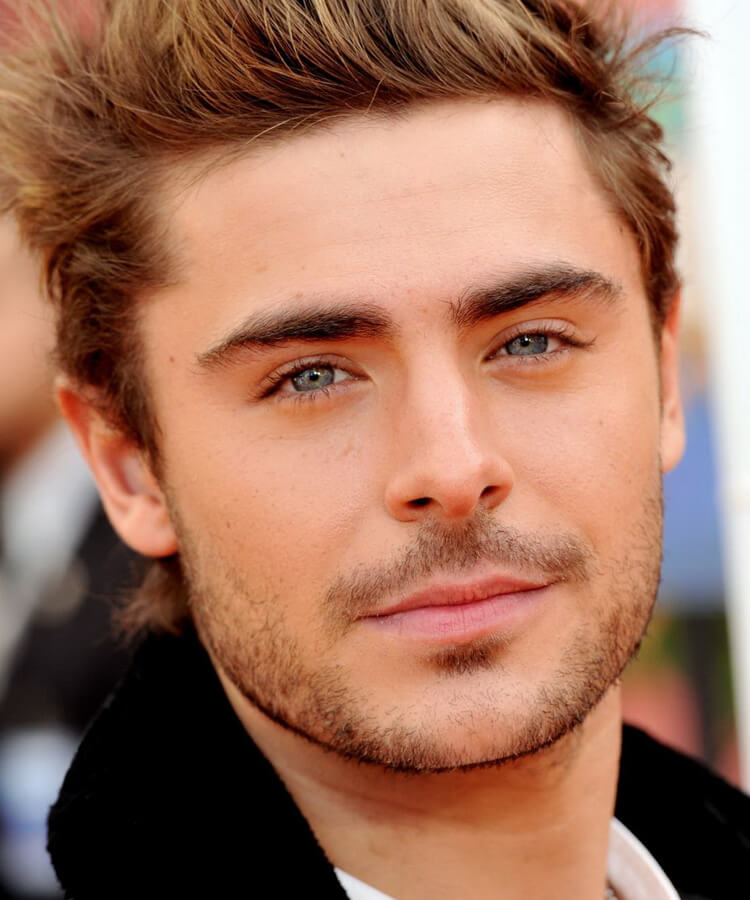
Ryan Gosling and Zac Efron is a comparison driven primarily by face shape and brow placement. Both have wide, square-ish faces with strong but not heavy brows, similar eye spacing, and a comparable mouth width. The jaw is where they differ most: Gosling's is more defined and angular. The human eye sees the similarity more readily than AI does because the resemblance is in proportion more than in individual feature shape.
Chris Pine and Chris Evans is the celebrity lookalike comparison that confuses more casual film audiences than any other. Both are classically handsome, dark-haired (or have been), square-jawed, with a similar eye setting and comparable nose profile. The AI tends to score these two moderately, not because the resemblance is weak but because the jaw angle diverges significantly once it is measured precisely.
Mark Ruffalo and Matt Damon is a comparison that comes up regularly in entertainment coverage and tends to survive AI analysis. Both have a similar face shape, very comparable eye setting, and a nose bridge that reads almost identically in profile. The difference is in the lower face: Matt Damon's chin is more prominent. But the upper two-thirds of their faces score closely.
Brad Pitt and Robert Redford is the generational pair. In their respective primes, both had classically symmetrical square faces, a similar brow placement, and a comparable nose-to-chin proportion. This is a pair where the AI often produces a high score precisely because the face geometry is so similar, even across decades of photographs.
CelebAI's movie stars category includes most of these names, and if you have ever been told you look like any of them, the matching tool will give you an actual percentage to work with.
The Science Behind Why Faces Look Alike
Two people can have the same face shape and the same eye color and look nothing alike. Two people can share only one feature and be constantly compared. The science of why faces register as similar is more complicated than it looks.
Facial recognition, whether human or AI, works primarily on a small set of anchor measurements. The most influential are:
Interpupillary distance (IPD): The space between your eyes relative to your total face width. This is one of the most diagnostic measurements in face matching because it is highly stable and difficult to disguise. Two people with similar IPD ratios will register as similar even if other features diverge.
Canthal tilt: The angle of the outer eye corner relative to the inner corner. A positive canthal tilt (outer corner higher than inner) creates an "upturned" eye appearance. A neutral or negative tilt creates a more horizontal or downturned look. This single measurement has an outsized effect on first-impression similarity judgments.
Midfacial proportion: The ratio of the distance from hairline to nose tip versus nose tip to chin. Most faces cluster in a narrow range of this measurement, but small deviations are highly readable. People with identical midfacial proportions look related even when other features are different.
Zygomatic width (cheekbone spread): The widest point of the face measured across the cheekbones. This determines overall face width category and has a strong effect on whether two faces "read" as similar. Faces in the same width category with different features will still seem familiar to each other.
Nose bridge angle: The angle from the brow ridge to the tip of the nose. This measurement affects how "straight" or "Roman" or "snubbed" a nose looks, and faces with similar bridge angles tend to be grouped together by both human perception and AI scoring.
The reason some "obvious" celebrity pairs score lower than expected is that one of these anchor measurements diverges sharply. The brain fills in the gap based on hair, coloring, and styling. The AI does not fill in gaps. It measures.
This is why Katy Perry and Zooey Deschanel score lower than their public reputation as celebrity twins would suggest: the eye shape similarity is real, but the jaw width and midfacial proportion are different. The human eye sees the dominant feature (those spectacular dark eyes) and groups them. The AI measures the whole face.
It is also why some pairs that humans would never group together score surprisingly high. Similar IPD, similar canthal tilt, similar cheekbone spread. Nothing else in common but the numbers match.
How AI Scores Celebrity Lookalikes (And Why the Results Surprise You)
CelebAI uses AWS Rekognition to compare facial geometry across a database of 1,400+ celebrities. The scoring is not based on visual impression. It is based on the actual measurements that research shows humans use subconsciously when identifying faces.
Here is what the AI is actually doing when it compares two celebrity faces:
It creates a numerical representation of each face based on the placement and proportion of key landmarks: the eyes, brows, nose, mouth, jaw, and overall face shape. This is called a face embedding, and it contains hundreds of values that encode the geometry of a specific face.
When you compare two celebrity faces, you are comparing their embeddings. The similarity score is not a judgment call. It is a mathematical distance between two sets of numbers.
This is why some celebrity pairs that seem identical to human observers score in the sixties rather than the nineties. The eye shape or the hair might be driving the human impression. The AI measures seventeen other things the human eye weights less heavily.
And it is why the "nobody talks about this" pairs often produce the most interesting results. Leighton Meester and Minka Kelly do not share the same cultural moment or the same famous aesthetic, so the comparison never went viral. But the face embeddings are close. Very close.
When you upload your own photo to CelebAI, the same process applies. Your face gets embedded and compared against 1,400+ celebrity embeddings. Your score reflects real geometric similarity. Not cultural association. Not coloring. Not whether you have the same hairstyle.
Your Celebrity Doppelganger Is Out There
Here is the thing about celebrity lookalikes: the phenomenon is not limited to celebrities. The same facial geometry patterns that make Bryce Dallas Howard resemble Jessica Chastain are distributed throughout the general population.
The face shapes and feature combinations that appear in the celebrities above appear in everyone. They appear in more or less pronounced forms, in different combinations, at different frequencies. But they are there.
Sarah from Nashville had been told her whole life that she looked like "someone famous" but nobody could ever agree on who. Different people said different names: one said Amy Adams, one said Emma Stone, one said Isla Fisher. She uploaded her photo to CelebAI and got a clear answer. Her top match was Amy Adams at 71%. Her second match was Emma Stone at 64%. The people who said Isla Fisher were rounding from the Adams comparison. She finally had a definitive answer to a question she had been fielding since high school.
Marcus from Manchester had never been told he looked like a celebrity. He uploaded his photo as a joke after his friends dared him to. CelebAI returned a 78% match to a celebrity he had genuinely never been compared to before and had barely heard of. He spent the rest of the evening down a rabbit hole looking at the celebrity's photos and finding the comparison genuinely uncanny. He has now used the platform to check himself against the Most Beautiful celebrities and three other categories.
You might be someone's celebrity doppelganger and have no idea. The Most Beautiful celebrities category is a good starting point for the comparison, but 25 categories cover everything from K-pop to Classic Hollywood to action stars. Somewhere in that database, there is a face that matches yours more closely than you would expect.
Find out who it is. Upload your photo and get your score.
FAQ: Celebrities Who Look Alike
Which celebrities are considered the most identical lookalikes?
The most frequently cited near-identical celebrity pairs are Bryce Dallas Howard and Jessica Chastain, Amy Adams and Isla Fisher, and Katy Perry and Zooey Deschanel. Among male celebrities, Tom Hardy and Logan Marshall-Green consistently come up as the strongest structural match. All of these pairs have caused genuine real-world confusion among fans, interviewers, and industry professionals.
Why do some celebrity lookalikes score lower than expected on AI face matching?
Human face perception is heavily weighted toward dominant features, especially eyes and hair. When two people share one very prominent feature, the brain tends to group them regardless of how much else differs. AI face matching measures dozens of facial geometry points simultaneously. A pair that shares dramatic dark eyes but has significantly different jaw structure or face proportions will score lower than the visual impression suggests, because the full geometry is divergent even if one feature is similar.
Are there celebrities who have confirmed they look alike?
Yes. The most famous case is the Star Wars prequel films, where Keira Knightley was cast as Natalie Portman's decoy specifically because of their physical resemblance. Studio casting directors made an official determination that the resemblance was strong enough for one to substitute for the other on screen. Katy Perry and Zooey Deschanel, Bryce Dallas Howard and Jessica Chastain, and Margot Robbie and Jaime Pressly have all addressed the comparison publicly in interviews.
Can I find out which celebrity I look like using AI?
Yes. CelebAI uses AWS Rekognition to compare your facial geometry against a database of 1,400+ celebrities and returns a percentage similarity score for each match. You can upload a photo at celebai.ai and get your first category match free. No account required for the free match. For a full database search across all 1,400+ celebrities, a paid account unlocks every result.
What makes two faces look alike scientifically?
The main factors are interpupillary distance (eye spacing relative to face width), canthal tilt (the angle of the outer eye corner), midfacial proportion (the ratio of upper to lower face), zygomatic width (cheekbone spread), and nose bridge angle. Faces that share similar values across these measurements will be perceived as looking alike even if other features differ. The resemblance is driven by the anchor measurements the brain uses to categorize and recognize faces, not by surface features like hair color or skin tone.
The Bottom Line
Celebrity lookalikes are one of the internet's most reliable obsessions. The Katy Perry and Zooey Deschanel debate has been running for fifteen years. The Bryce Dallas Howard and Jessica Chastain confusion has a body count of professional photographers who have mislabeled their own shots.
But what AI face matching adds to this conversation is precision. The pairs that fool human observers often score differently from what the visual impression would suggest. The pairs nobody talks about sometimes score higher than the famous ones. The geometry does not care about cultural association or hair color or the era in which someone was famous.
If you have ever been told you look like a celebrity, or if you are simply curious where your face lands, the most honest answer comes from the measurement, not from someone's gut feeling.
CelebAI matches your face against 1,400+ celebrities using the same AWS Rekognition technology that underlies professional face analysis. Your first category match is free. No quiz. No guessing. Just the geometry.
You might be someone's celebrity doppelganger. Find out.
Posted March 9, 2026. CelebAI uses AWS Rekognition to compare facial geometry. Results reflect structural similarity, not styling or appearance.